


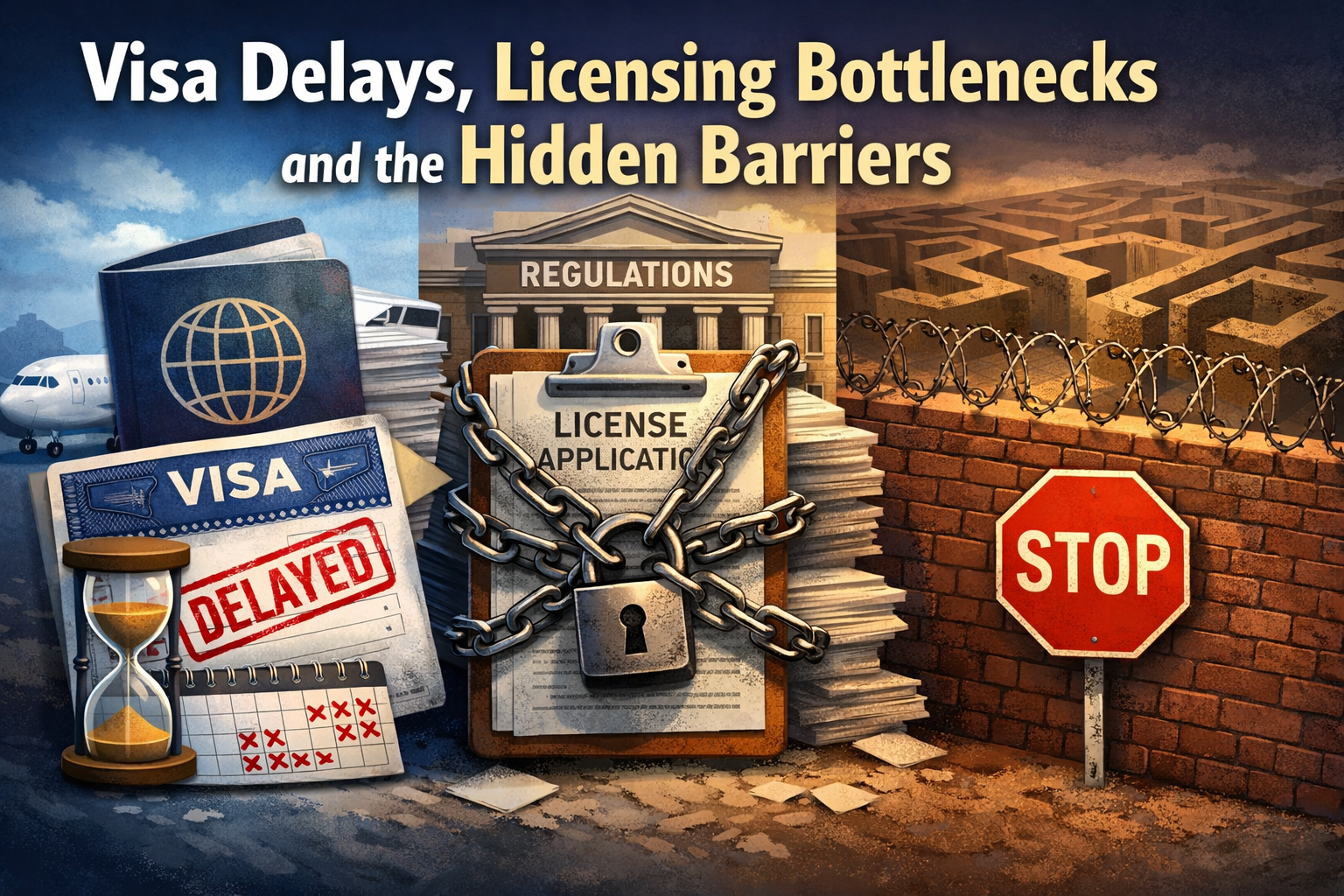
Visa Delays, Licensing Bottlenecks and the Hidden Barriers to a Seamless South African Travel Experience
South Africa travel visa transport licensing systems play a critical role in shaping the country’s tourism performance. While South Africa remains one of the continent’s most attractive travel destinations, bureaucratic inefficiencies continue to quietly undermine its full potential.
Visa backlogs delay international arrivals. Licensing bottlenecks slow transport operators. Regulatory fragmentation creates uncertainty for travel agencies. Individually, these issues may seem administrative. Collectively, they form structural barriers to a seamless travel experience.
For a country positioning itself as a premier global destination, addressing these hidden obstacles is no longer optional—it is strategic.
- Why Bureaucratic Efficiency Matters for Tourism Growth
- Visa Delays: The First Friction Point
- Transport Licensing Bottlenecks: A Domestic Growth Constraint
- The Hidden Cost of Bureaucratic Inefficiency
- Why These Bottlenecks Matter for National Competitiveness
- Strategic Solutions: Modernising Travel Bureaucracy
- The Role of Digital Ecosystems in Travel Coordination
- What Stakeholders Should Prioritize
- Frequently Asked Questions
- Conclusion: Removing Invisible Barriers to Unlock Tourism Growth
Why Bureaucratic Efficiency Matters for Tourism Growth
Tourism depends on movement. But movement depends on permission, compliance, and regulatory clarity.
When visa approvals are slow or unpredictable, travellers reconsider destinations. When transport operator licenses take months to process, fleet expansion stalls. When regulatory processes lack transparency, smaller operators struggle to compete.
South Africa’s tourism ambitions rely not only on marketing campaigns and infrastructure upgrades but also on the efficiency of administrative systems supporting the sector.
Visa Delays: The First Friction Point
1. Processing Backlogs and Inconsistent Timelines
International visitors often face visa processing delays that disrupt travel planning. Lengthy turnaround times create uncertainty for:
- Conference delegates
- Group tours
- Event travellers
- Seasonal leisure tourists
In today’s competitive tourism environment, convenience is a deciding factor. Destinations offering fast, predictable digital visa systems gain an advantage.
2. Impact on Group and Business Travel
Group bookings are particularly sensitive to delays. Tour operators planning multi-country packages require reliable approval timelines. When visa confirmation becomes unpredictable, operators either:
- Divert clients to alternative destinations
- Absorb cancellation risks
- Increase package prices to buffer uncertainty
Each scenario weakens competitiveness.
3. Digital Visa Systems: Progress and Gaps
South Africa has taken steps toward digitising parts of its visa application processes. However, system integration remains inconsistent across departments and application categories.
Without unified digital tracking dashboards, applicants often lack visibility into application status. This opacity increases anxiety and administrative workload for agencies managing client files.
Transport Licensing Bottlenecks: A Domestic Growth Constraint
While visa delays affect inbound tourism, transport licensing bottlenecks constrain the domestic and operational side of the industry.
1. Lengthy Licensing Approvals
Transport operators—whether shuttle services, tour vehicles, or intercity transport providers—require operating licenses to function legally. Delays in approvals can:
- Prevent new entrants from entering the market
- Delay fleet expansions
- Increase compliance costs
- Limit service availability in underserved regions
When operators cannot scale efficiently, tourism access suffers.
2. Fragmented Regulatory Oversight
Licensing processes may involve multiple authorities, provincial structures, and compliance requirements. The lack of centralized coordination can create:
- Repetitive documentation submissions
- Inconsistent interpretation of regulations
- Extended waiting periods
- Reduced transparency
For small and medium-sized operators, this complexity becomes a barrier to entry.
The Hidden Cost of Bureaucratic Inefficiency
Administrative bottlenecks create invisible economic drag.
For International Visitors:
- Missed travel windows
- Increased uncertainty
- Reduced confidence in planning
For Travel Agencies:
- Higher administrative overhead
- Increased risk exposure
- Delayed revenue realization
For Transport Operators:
- Idle assets awaiting approval
- Restricted growth
- Lost market opportunities
Over time, these inefficiencies reduce tourism elasticity—making the sector less responsive to demand surges or seasonal spikes.
Why These Bottlenecks Matter for National Competitiveness
Globally, tourism destinations are racing to simplify regulatory systems. Countries that implement:
- eVisa platforms with rapid turnaround
- Automated compliance checks
- Centralised digital licensing portals
- Real-time application tracking
are improving visitor satisfaction and attracting more operators into the ecosystem.
South Africa travel visa transport licensing processes must align with this global standard to maintain competitive positioning.
Administrative friction does not appear on marketing brochures—but it shapes reputation.
Strategic Solutions: Modernising Travel Bureaucracy
While structural reform takes time, practical improvements can deliver measurable progress.
1. Unified Digital Workflow Platforms
Centralised digital systems that integrate visa processing, transport licensing, and compliance management can significantly reduce redundancy.
Such platforms can:
- Automate document validation
- Enable real-time status tracking
- Flag incomplete applications early
- Reduce manual processing time
Digital dashboards improve transparency for both applicants and regulators.
2. Tech-Assisted Application Tracking
Application tracking systems allow:
- Tour agencies to monitor group visa submissions
- Transport operators to track license renewal cycles
- Authorities to identify bottlenecks in processing queues
With data analytics, regulators can pinpoint inefficiencies and allocate resources accordingly.
3. Data-Driven Regulatory Audits
Periodic audits using anonymised data can reveal:
- Average processing timelines
- Peak application periods
- Regional approval disparities
- Recurring compliance errors
This evidence-based approach allows targeted reform instead of broad, reactive policy adjustments.
4. Interdepartmental Integration
Tourism, transport, and immigration systems often operate independently. Digital bridges between departments can:
- Reduce repetitive documentation
- Synchronize approvals
- Improve inter-agency communication
- Streamline oversight without compromising compliance
Integration enhances accountability while preserving regulatory integrity.
The Role of Digital Ecosystems in Travel Coordination
Modern digital ecosystems are increasingly becoming the backbone of efficient travel industries.
Integrated travel management platforms can:
- Centralise booking systems
- Monitor compliance documentation
- Track licensing validity
- Align operational scheduling with regulatory requirements
When platforms unify operational and compliance data, operators reduce administrative risk and improve agility.
Forward-thinking digital architecture—such as centralized travel and transport coordination systems—can help bridge bureaucratic gaps without exposing sensitive operational data. By consolidating workflows and providing secure document management, such systems reduce delays and increase confidence among stakeholders.
The objective is not deregulation. It is smart regulation powered by visibility and automation.
What Stakeholders Should Prioritize
To strengthen South Africa travel visa transport licensing efficiency, stakeholders should focus on:
- Accelerating full digitisation of visa categories
- Implementing centralized licensing dashboards
- Enhancing real-time communication channels
- Leveraging analytics to identify delay patterns
- Encouraging public-private collaboration in digital transformation
Tourism growth requires more than destination marketing—it requires frictionless access.
Frequently Asked Questions
Why do visa delays affect tourism demand?
Unpredictable approval timelines discourage travel planning, particularly for time-sensitive trips like conferences and group tours.
How do transport licensing bottlenecks impact tourism?
They limit the number of operational vehicles and operators, reducing availability and increasing service costs.
Can digital systems fully solve bureaucratic delays?
While they cannot eliminate all structural constraints, digital workflows significantly reduce processing time, improve transparency, and enhance coordination.
Why is regulatory integration important for tourism growth?
Integrated systems reduce duplication, streamline approvals, and improve communication across departments, making the overall travel experience smoother.
Conclusion: Removing Invisible Barriers to Unlock Tourism Growth
South Africa travel visa transport licensing processes sit quietly behind the scenes of every tourism transaction. Yet their efficiency—or inefficiency—directly shapes visitor experience, operator growth, and national competitiveness.
While progress has been made toward digitalisation, further integration, transparency, and workflow automation are essential.
By embracing smart regulatory modernization and leveraging digital coordination platforms, South Africa can remove invisible friction points, strengthen trust, and unlock sustainable tourism growth.
The opportunity lies not just in attracting travellers—but in making their journey seamless from application to arrival.