


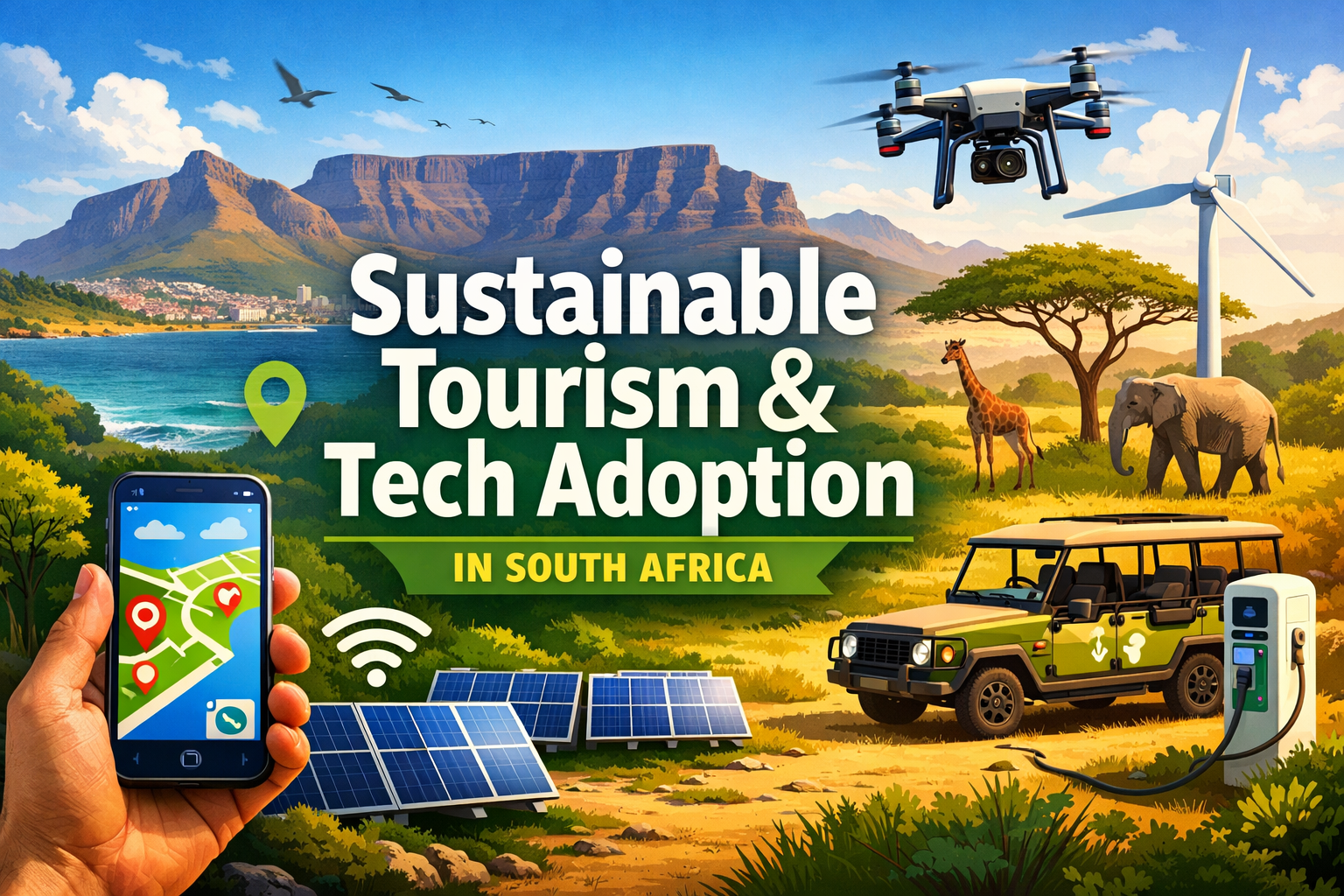
Building Sustainable and Inclusive Travel in South Africa: From Tech Adoption to Better Customer Experiences
Sustainable tourism South Africa tech adoption is emerging as a critical driver of growth, inclusivity, and service quality. While the country boasts spectacular natural landscapes, cultural heritage sites, and vibrant cities, tourism growth is often uneven. Rural destinations, smaller operators, and independent travel experiences face structural barriers, limiting accessibility and service delivery.
The adoption of information and communication technology (ICT) combined with sustainable practices can unlock these areas, providing inclusive, high-quality travel options while reducing environmental impact.
- Why Sustainable and Inclusive Travel Matters
- The Role of Technology in Transforming Travel
- Challenges Without Tech Adoption
- Tech Adoption and Customer Experience
- Sustainability Beyond Convenience
- Inclusive Travel Through Digital Literacy
- Real-World Applications and Opportunities
- Frequently Asked Questions
- Conclusion: Digital Transformation for Inclusive, Sustainable Travel
Why Sustainable and Inclusive Travel Matters
Tourism is more than leisure—it is a major economic driver. When inclusive and sustainable practices are integrated:
- Rural communities gain direct economic benefits
- Operators increase service reach and revenue stability
- Visitors enjoy safer, more reliable, and environmentally responsible experiences
- The industry reduces negative ecological and social impacts
For South Africa, inclusive tourism ensures economic benefits are broadly distributed while positioning the country as a responsible global destination.
The Role of Technology in Transforming Travel
ICT adoption is essential for overcoming operational, logistical, and informational barriers in the travel sector.
1. Digital Booking and Coordination Tools
Centralised platforms allow travelers to:
- Book transport and tours seamlessly
- Access verified service providers
- Coordinate multi-modal travel itineraries
- Receive real-time updates on schedules and availability
For operators, platforms improve operational efficiency and reduce redundancies while expanding reach to under-served rural markets.
2. Mobile and Online Access in Rural Areas
Rural destinations often struggle with visibility and accessibility. Mobile technology helps by:
- Offering GPS-enabled route mapping
- Providing mobile booking and payment options
- Increasing discoverability of local attractions
- Sharing real-time travel advisories
Tech adoption ensures rural tourism becomes economically viable and accessible for all travelers.
3. Data-Driven Sustainability
Sustainable tourism depends on informed decision-making. Digital tools allow operators to:
- Monitor visitor numbers at sensitive sites
- Track resource consumption such as water and energy
- Implement dynamic pricing to manage demand
- Assess environmental and social impacts of tours
Analytics enable operators to balance economic, environmental, and community outcomes effectively.
Challenges Without Tech Adoption
Without ICT and digital literacy, rural tourism and transport face:
- Limited market visibility
- Fragmented booking systems
- Inefficient resource allocation
- Poor customer service consistency
- Inability to scale operations sustainably
These gaps hinder growth, limit inclusion, and reduce visitor satisfaction.
Tech Adoption and Customer Experience
Modern travelers expect more than just a destination—they value seamless experiences. ICT improves customer satisfaction by:
- Providing clear information about routes, schedules, and safety
- Enabling easy, secure payments
- Offering feedback loops through reviews and ratings
- Allowing operators to customise experiences based on preferences
Better experiences encourage repeat visits and strengthen the country’s tourism brand.
Sustainability Beyond Convenience
Technology is also central to reducing the ecological footprint of tourism:
- Digital itineraries reduce paper use
- Mobile ticketing lowers queue congestion and emissions
- Route optimisation reduces fuel consumption
- Data monitoring ensures responsible visitor management
Combining technology with sustainability principles positions South Africa as a competitive, environmentally responsible destination.
Inclusive Travel Through Digital Literacy
Training local operators in ICT:
- Expands their ability to offer online bookings
- Improves marketing and visibility
- Enhances customer service standards
- Increases competitiveness against larger operators
Empowering rural and small-scale operators digitally contributes to more equitable tourism growth.
Real-World Applications and Opportunities
- Transport Coordination Platforms – Integrate buses, shuttles, taxis, and tour vehicles for reliable multi-modal travel.
- Community-Led Tourism Apps – Allow rural hosts to manage bookings, showcase experiences, and receive digital payments.
- Eco-Monitoring Tools – Track energy and water use to ensure sustainable operations.
- Data Analytics Dashboards – Forecast peak periods, optimise pricing, and manage visitor flow at sensitive attractions.
These tools not only streamline operations but also improve visitor confidence and broaden accessibility.
Frequently Asked Questions
Why is tech adoption critical for rural tourism?
It improves visibility, simplifies bookings, ensures operational efficiency, and enhances visitor satisfaction in less-served areas.
How does digital adoption support sustainability?
It enables better resource tracking, reduces waste, lowers emissions, and helps manage visitor numbers responsibly.
Can small operators compete with larger companies using technology?
Yes. With accessible digital tools, small operators can reach wider markets, offer competitive services, and manage bookings efficiently.
How does tech adoption improve customer experiences?
Real-time updates, seamless bookings, and responsive communication create smoother, more enjoyable travel experiences.
Conclusion: Digital Transformation for Inclusive, Sustainable Travel
Sustainable tourism South Africa tech adoption offers a dual benefit: it enhances operational efficiency and improves traveler experience while promoting inclusivity and environmental responsibility.
By integrating ICT tools—from digital booking systems and route planning apps to data-driven sustainability dashboards—operators can overcome traditional barriers, reach rural markets, and provide superior services.
The result is a tourism ecosystem that is not only economically productive but also inclusive, environmentally conscious, and capable of meeting the expectations of modern travelers.
South Africa’s future as a global tourism destination depends on this transformation: smart technology adoption driving sustainable and inclusive experiences for all.